Poetic Justice’s Finest Hour

One possible outcome of Trump’s travel ban:

The order is defeated specifically because the Republican party would not seat a 9th justice on the Supreme Court last year.

A 4-4 tie could be the end of the matter.

I would be overwhelmed with schadenfreude at such a clear demonstration of poetic justice.

Fake news: a failure

The easy solution to dealing with fake news is to detect it, block it and prevent it from spreading.

That’s fraught with danger, as is any censorship.

How do you distinguish fake news from extreme positions held sincerely? The motive of a post can make it troublesome, but extracting the motive behind content is difficult. For a human to separate satire from deception can be unreliable. To believe that misinformation can be reliably detected by software is trusting technology more than it deserves.

How can you trust the institutions that are determining what is fake news? The organizations that determine what that should limit or block can be influenced by money and power to support someone’s agenda. Bullies on twitter can push people around and outplay the cards that a businessperson keeps close.

The problem of destructive news being propagated is a failure.

Ideally, a successful democracy has informed citizens who make rational decisions based on information that they thirst for.

The internet dopes up any such thirst with quick answers that don’t have any knowledge behind them… let alone wisdom.


YYJ – a historian

One of my current projects is yyj (for lack of a better name. It’s the archive file’s suffix.). It’s a file historian system. It disclaims any aspiration to be a version control system. It is primarily meant to be used by a single user.

The goal of the system is to efficiently maintain a history of documents. It is not based on a check-in model. Instead, the history is updated continuously in the background. If a file was saved every half hour, each update would be available without any intervention from the user.

It make use of the fact that .docx and .ods files are actually compressed with zip. I believe it would be efficient Java .jar files. It is optimized for XML files.

I’ve been using variants of yyj for many years and find it useful. The versions I’ve been using aren’t useful by anyone else because there is no UI. Variants have existed since 1989.

My inspiration for polishing it was listening to a student describe his Capstone project at IUPUI. He mentioned having to make copies repeatedly and struggle to keep the copies organized and up to date.

yyj would make that organization trivial. The student could retrieve any past version if it was needed. He would only need to save a single file to keep his work safe from software and hardware failures. Intermediate versions could be deleted when they aren’t relevant any more.

I think that if I succeed, yyj could be useful to very many people.

IUPUI Capstone

This weekend I went down to IUPUI for the first time.

I’ve been taking LIS classes for a long time, but since they were all online, I didn’t have a need to head down there.

This semester I was had an internship at the Auburn library’s William H. Willinnar Genealogy Center. One of the requirements of the internship is to participate in the Capstone program at the end of the semester.

I got my presentation ready in time for the event and headed down. It was a good experience. I would have liked to have seen what other people had presented, but I didn’t have anyone to spot for me and watch my display so I couldn’t wander off.

I did my best to use some artistic expertise in putting together the display of “Growing a collection through donations and loans.” I had some cream colored cardstock that I put the information on. It took a while to decide what to say and get all of the parts designed and printed up.

I have a bunch of colored paper from the past and I had some that was a nice light green that I put offset from the main text. With the black background of the display, the green really set off the design and made it attractive. I also managed to use color in the text effectively I think. At first I wanted to have a spectrum of colors, but I ended up just using red, blue, green and black which was a lot easier to look at and less busy.

When I got there I felt really inadequate and out of place. Before everything started, I was talking to another Library Science intern who was also there and that helped me feel like I belonged.

One of the people who was taking pictures for the event took several pictures of me talking to people and of the display. Of the people in my room, my material was the most colorful. I’ve been told by family that I’m pretty photogenic, so I hope the photos come out well. Maybe they’ll be up on the Capstone website soon.

I really like the director of the Capstone program. He is really energetic and really funny, in a good way.  I hope I didn’t look like I was laughing at him because I thought he was charming and genuinely entertaining. I couldn’t help but smile while I was watching him in the room where us 4 LIS students were presenting. He showed me his interest in steampunk and his drawings which were a cool surprise.

When I got home, I felt really energized by the experience. I think part of it was being on campus and being around a new group of people.

I had dinner after the presentations with the instructor of the internship, Kym, the department chair, Andrea, and her partner. For some reason, he seemed really familiar to me, but I couldn’t place where. From the conversation we had at dinner, I still couldn’t figure out if I had met him somewhere before and I was too shy to ask.

I’d like to go down to IUPUI more often this semester. I think participating in the university experience in person will enhance my enthusiasm and creativity. Being around other students in person is a lot different then having conversations with them on the course websites.

During the event, I met the professor, Kyle, who is leading my independent study class on privacy. That was nice too. In the past we’d only spoken on the phone or thru email.

For me Capstone wasn’t a high pressure event. However, for all of the other students in the SOIC department, the computer scientists, human computer interaction students, and design students, the Capstone had to succeed or they wouldn’t graduate. For me, it was more an opportunity to promote the library and information science department and try something completely different.

I hope to go to Capstone in the spring as an audience member instead of as a participant. Mathew (the director of Capstone) said there’ll be around 100 Capstones in May. Awesome!


Drug: a definition

a. Something that has been purified.

b. Something that causes a characteristic change in an organism.

or c. Something that is chosen because it might cause a characteristic change.


Once a drug has been identified, there are some questions to ask:

  • What are its side effects?
  • How small of an amount can have an effect?
  • Does it interact with anything else?
  • Does chronic use of it cause problems? At what levels? What problems?
  • Does its usage affect other organisms?
  • What do you need to do to stop using it safely?
  • Can it cause acute harmful effects? At what levels? What effects?

A key point of this definition is that it does not specify that a drug must be a substance. Also a drug is defined by the change, not by its design.

I’ll come back to this definition once in a while to show how it can be a useful frame to think about important issues.

Silly Idea?

A red raspberry laying on a leafWhen the Bible talks about idols of gold and silver, does that have any application to us now?

Is our money a modern-day form of idol? I’ve heard people talk about the almighty dollar, so that makes me wonder.

We don’t make golden calves or set up altars to baal on the mountain tops, but it’s worth reviewing whether there are modern forms of idolatry just as sinful.

Original image: Untitled. By SeRg1o [Image license]

Censorship and the Courts

I was reading “Courts and Censorship” by Hans A. Linde[1].
A sculpture of blind justice holding a balance
He concludes: “When a constitutional prohibition is addressed to lawmakers, as the first amendment is, the role that it assigns to courts is the censorship of laws, not participation in government censorship of private expression. This, I suggest, is not an inappropriate relation between courts and censorship.”

What this means to me is that the courts can take an expression of law and cut out the offending part of the law, while it should not take an expression of ideas, speech or writing and cut out the offending part of the expression.

That’s just so poetic to me. Perhaps the first clause is a way to clarify the definition of judicial restraint.

Original image: Blind Justice 3. By Marc Treble [Image license]

[1] Linde, H. (1981). Courts and Censorship. Minnesota Law Review 66(1), 171-208.

New home

Hi

I’ve moved this blog to a new home. http://blog.sesquibits.com

Tomato tango

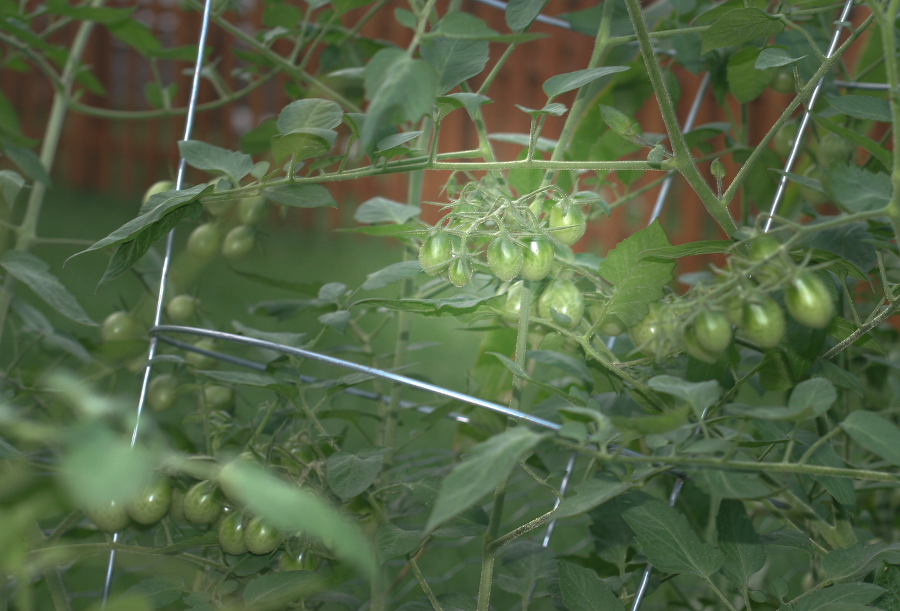
a photograph of grape tomatoes at varying shades of ripeness
Unripe grape tomatoes
Grape tomatoes among some vines

Know the “enemy”

It’s interesting to go to international English language newspapers.

With the Internet being borderless, you can learn things from different perspectives. Especially in war and conflict.

I’ve learned some of the enticements ISIS gives to get Taliban fighters to join it in Afghanistan. One is to “join the winning team.” Another is “the West hates Muslims.”

That Syrian media portrays Bashar al-Assad as hugely popular and well-loved.

When Russia was making bombing attacks in Syria, the Russian use of the Iranian airbase was controversial in the Iranian parliament. Iran has a constitutional provision that prohibits it from allowing foreign armies to deploy on Iranian soil.

Brazil is undergoing a political crisis far beyond the impeachment of the president. Due to corruption charges against many of its politicians.

The Palestinians are following proceedings in the International Criminal Court about crimes committed during the Gaza conflict by both sides. Israel rejects the court’s authority.

The local paper glossed over the players in a recent terrorist attack from Gaza. In Israel, a non-Hamas group claimed responsibility, but the paper said “Israel holds Hamas responsible….” so that the U.S. paper didn’t have to explain the messy details of the Gaza conflict where there are multiple actors.

The contrast between the Chinese culture and the U.S. culture was an interesting subtext of the Shanghai Daily. It seemed to me that even though China has over a billion people, the articles have a “small-town” feel to me. The local, small-town paper, The Star in DeKalb County Indiana has plenty of stories of conflict and disunity in the U.S.